Last reviewed: July 14, 2026. This is a practical packing checklist; confirm vehicle-specific tools, trail access and local rules before riding.
Remote ATV rides need more than snacks and a full tank. In Atlantic Canada, a simple day ride can include rain, mud, wind, weak cell coverage, changing trail access and a route that takes longer than expected.
Core Packing Checklist
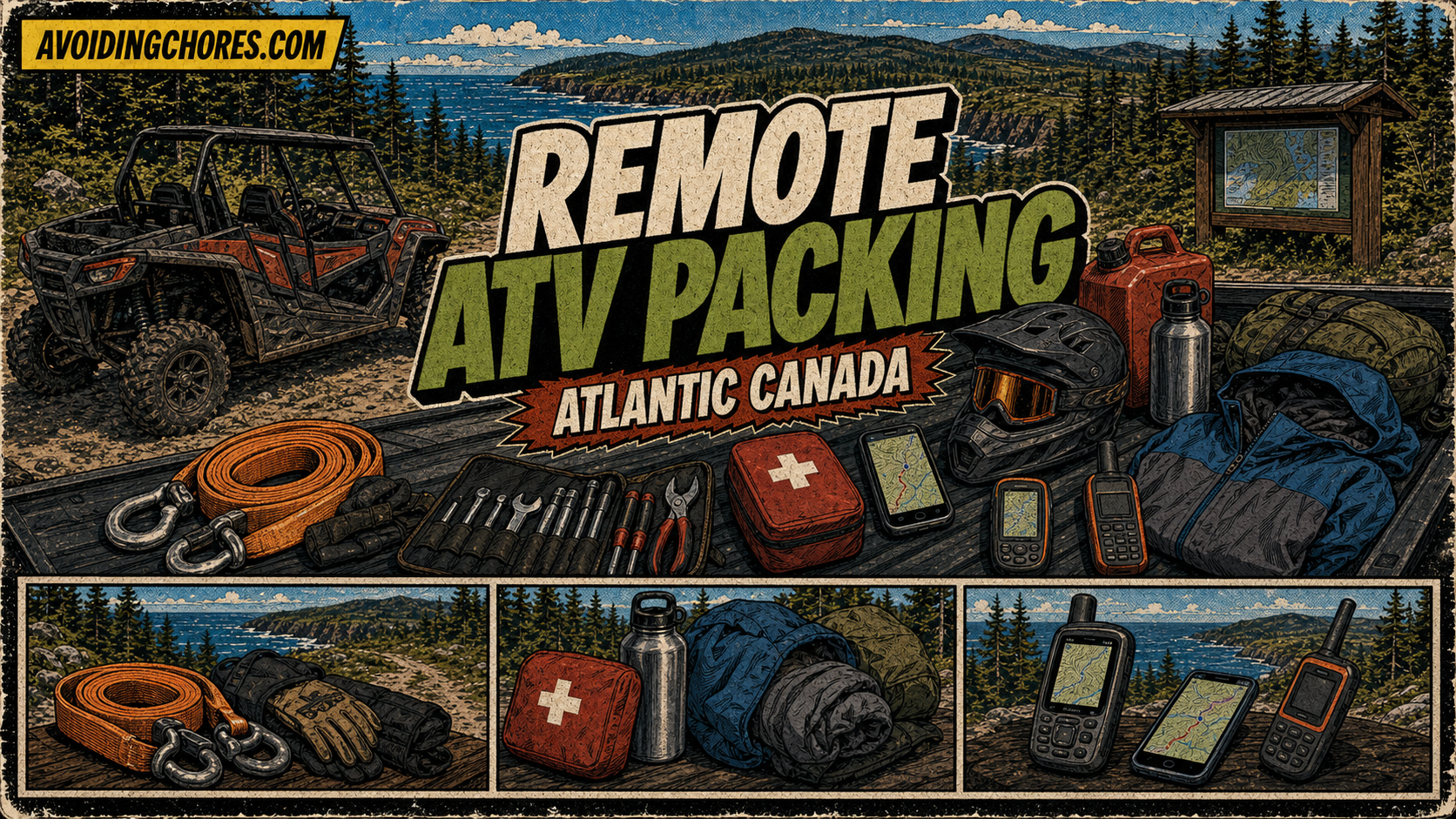
- Water, food and one extra snack or meal.
- Rain jacket, warm layer, gloves and dry socks.
- First aid kit and personal medication.
- Headlamp or flashlight.
- Phone with offline maps.
- Handheld or mounted GPS.
- Satellite communicator if riding beyond reliable cell coverage.
- Recovery strap, winch gear, gloves and shovel.
- Tire repair kit and portable air compressor.
- Basic tools and vehicle-specific spares.
Pack For The Route
A short club trail ride and a remote forest-road loop do not need the same kit. Start with distance from pavement, cellular coverage, weather, water crossings, fuel range and whether you are riding alone or with a group.
Communication And Contacts
If you carry a Garmin inReach, ZOLEO or other satellite communicator, prepare contacts before the ride. Make sure check-ins, delayed-return messages and emergency contacts are current.
Bottom Line
The goal is not to overpack; it is to carry the items that keep a delay, flat tire, wrong turn or weather change from becoming a much bigger problem.
Access And Rules To Verify
ATV route access changes. Before riding, check the Nova Scotia OHV information page, ATVANS, ATVANS approved road trails, or QuadNB for New Brunswick routes. Also follow posted signs, landowner rules, club guidance, seasonal closures, fire restrictions and local laws.
Related AvoidingChores ATV And Navigation Guides
- Atlantic Canada ATV trip-planning guide
- Prepare satellite communicator contacts before a trip
- Plan an off-road ATV trip with Gaia GPS and Garmin Explore
- Find trail access and difficulty information on Garmin Tread
- Garmin maps: free vs paid options for handheld GPS users
- Garmin inReach vs ZOLEO for Canadian outdoor users