
Last reviewed: July 31, 2026. Charging networks, connector availability, pricing and app behaviour can change. Check the current charging apps before relying on any stop.
First Real F-150 Lightning Road Trip
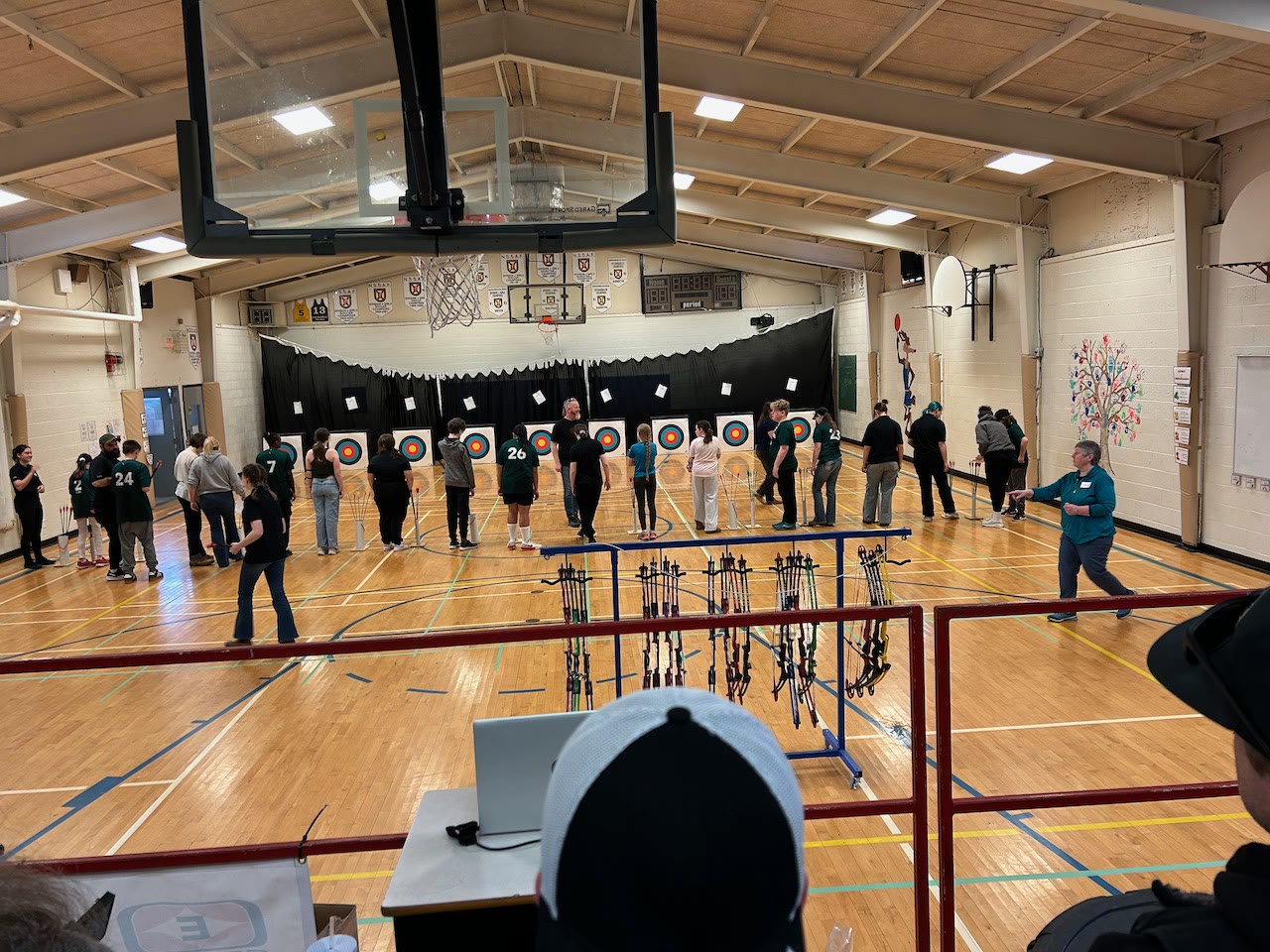
This was my first bigger EV road trip with the Ford F-150 Lightning. The trip started in the Halifax/Bedford area and the destination was the Advocate Harbour area for an archery competition in early May.
It was not a solo test drive or a perfect spreadsheet route. It was a practical family trip with me and the little one, about a month into owning the truck, trying to figure out what the range estimate actually meant on Nova Scotia roads.
The rough plan was:
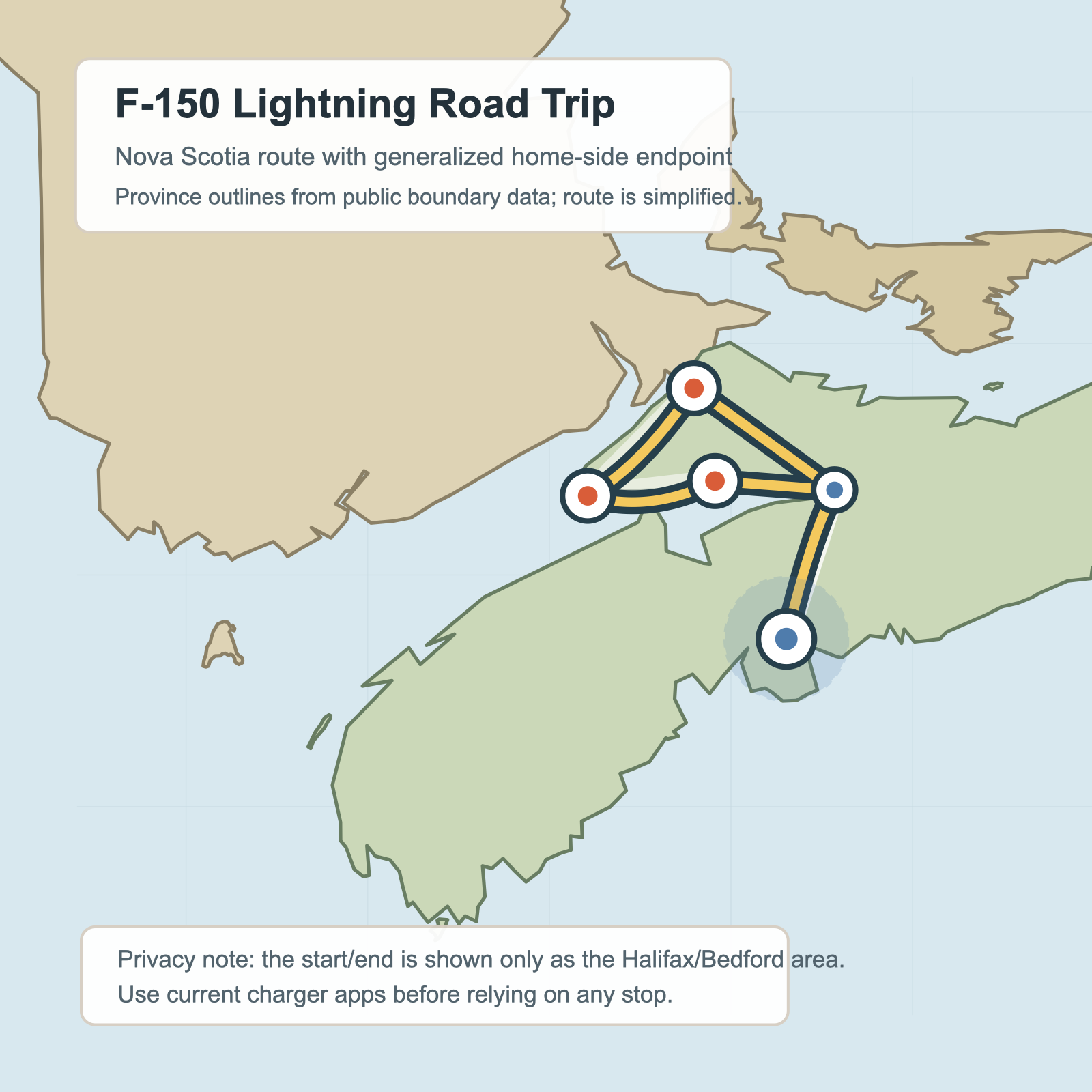
- Halifax/Bedford area to Masstown.
- Masstown to Amherst.
- Overnight in Amherst.
- Amherst to Advocate Harbour.
- Advocate Harbour back through Parrsboro, Five Islands and Masstown.
- Masstown back toward the Halifax/Bedford area.
The trip mattered because it was the first time the Lightning had to work like a normal travel vehicle, not just a local errand vehicle.
Trip Route Overview
For privacy, I am keeping the exact start and end point generalized. The useful public route points were Amherst, Advocate Harbour, Five Islands and Masstown.
- Halifax/Bedford area, generalized for privacy.
- Super 8 by Wyndham Amherst NS, used as the overnight stop.
- Advocate District School / Advocate Harbour area, used for the archery competition destination.
- Five Islands Lighthouse Park, used as the scenic charging and lunch stop on the return route.
- Masstown Market, used as the fast-charging stop on both outbound and return legs.
Why We Planned An Overnight Stop
Halifax to Advocate Harbour is not an impossible drive, but it is long enough that I did not want to leave too early and turn the whole day into a range-management exercise before an archery competition.
We decided to stay overnight in Amherst. That gave us a practical midpoint, reduced the morning pressure and gave us a chance to use destination charging while we slept.
That overnight stop ended up being one of the most useful parts of the plan.
Planning The Route With PlugShare
Before leaving, I used PlugShare to look at available charging options along the route. At that point I was still learning the truck, so the planning was partly about chargers and partly about confidence.
The main concern was not whether the Lightning could do highway kilometres. It was understanding how much buffer I should leave when Nova Scotia terrain, spring temperatures and rural routing were involved.
The route up Highway 102 toward Truro made sense because Masstown Market had Nova Scotia Power fast chargers. From there, Amherst was reachable without turning the trip into a guessing game.
Before leaving Amherst the next day, I also checked the return options. We could return through Amherst if needed, or we could take the Minas Basin route through Parrsboro, Five Islands and back toward Truro.
PlugShare showed fewer options along that coastal route, but there was a FLO charger at Five Islands Park. That made the scenic route more realistic.
First Charging Stop: Masstown Market
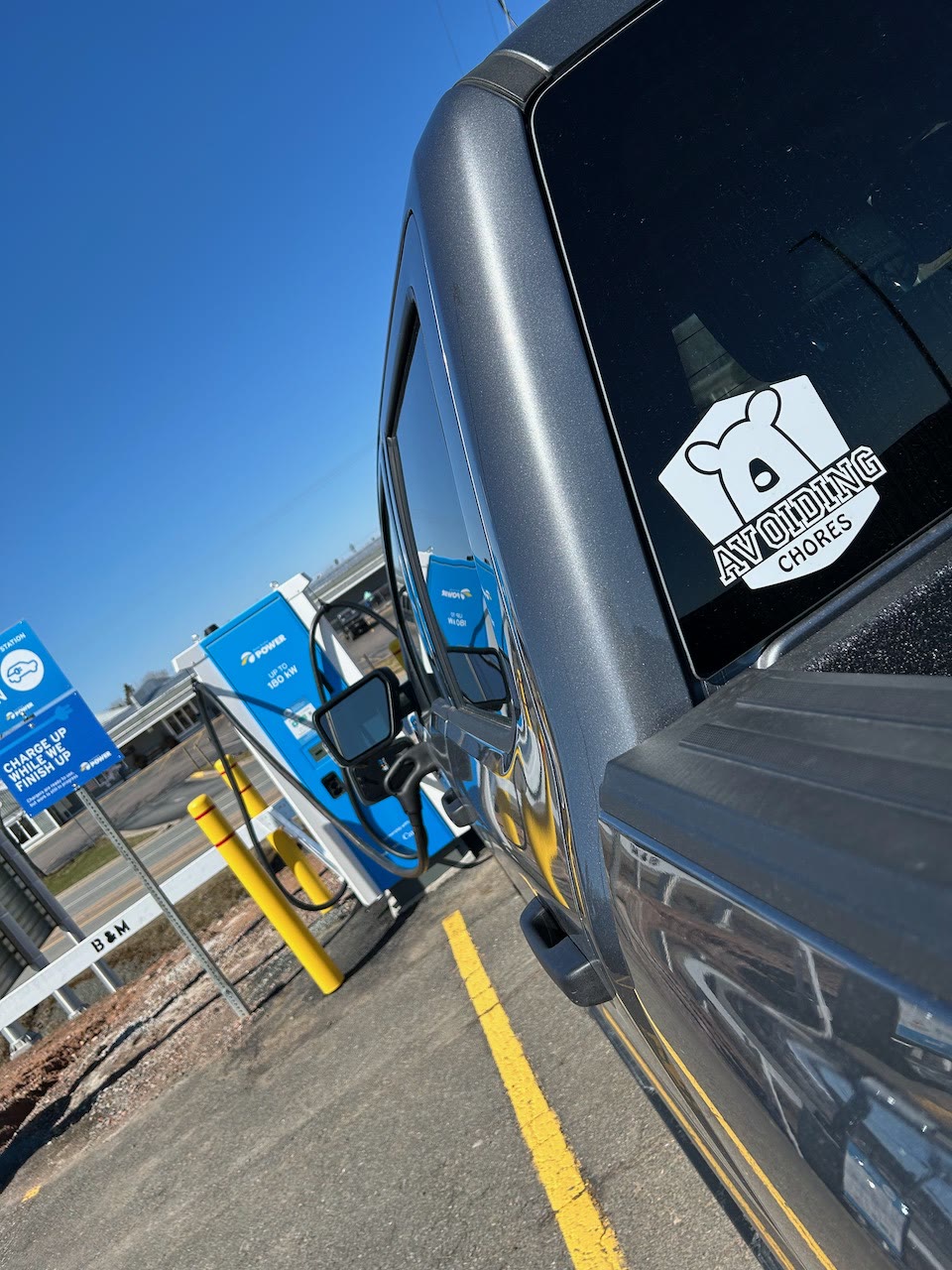
The first charge was at Masstown Market. We drove from Halifax up Highway 102 toward Truro and stopped there to top up.
At the time, the Nova Scotia Power fast charging stations at Masstown were new. We were able to add enough charge in about 20 minutes to make the next leg to Amherst comfortable.
That stop was a good first lesson: a fast charger at the right location changes the whole feel of a trip. It gives you options, and options reduce range anxiety.
Overnight Charging In Amherst
In Amherst, we stayed at the Super 8 by Wyndham Amherst NS, which had a Level 2 charger available.
We were lucky enough to plug in overnight and bring the truck back to 100% while we slept. That made the next day much easier because we were starting the competition day with a full battery instead of trying to recover range on the road.
For road trips in Atlantic Canada, this is one of the biggest practical lessons: Level 2 charging is slow if you are waiting around, but excellent if it matches an overnight stay.
Real-World Range And Early Range Anxiety
At the start of the trip, there was some range anxiety. That was mostly because we were only about a month into owning the Lightning.
The truck might show a range estimate, but until you drive a few real routes, that number still feels abstract. Nova Scotia does not look mountainous compared with some places, but the elevation changes still affect consumption. Early spring temperatures can also matter.
For this trip, I expected roughly 300 to 350 kilometres based on the charge level I had. We covered the distance without a problem, but I was still watching the state of charge closely.
The main range factors on this trip were:
- Highway speeds on the Halifax-to-Truro portion.
- Hills and elevation changes.
- Early May temperatures in Nova Scotia.
- More efficient driving on slower rural roads.
- Coastal terrain along the Bay of Fundy.
There was no major wind or rain issue on this trip, which helped keep things straightforward.
Using Apple Maps For Battery Estimates
One thing that helped more than expected was Apple Maps.
Apple Maps could work with the truck’s battery estimate and give a better arrival estimate for the destination. Instead of navigating from Advocate Harbour all the way to Halifax in one shot, I used smaller route segments.
For example:
- Advocate Harbour to Parrsboro.
- Parrsboro to Five Islands.
- Five Islands to Masstown.
- Masstown to Halifax.
That made it easier to judge each leg and avoid driving into a section where the arrival state of charge would feel too low.
My comfort point was to avoid planning a leg that would take us below about 20% state of charge.
Taking The Minas Basin Route Home
After the archery competition, we decided to take the Minas Basin route home instead of simply returning through Amherst.
That meant travelling from Advocate Harbour through the Parrsboro area, then toward Five Islands and back to Truro/Masstown.
This was the part of the trip where charger spacing mattered most. PlugShare did not show a lot of options along that route, but the Five Islands Park charger gave us a useful middle step.
The route was more scenic, and the slower rural-road speeds helped efficiency. Even with the coastal elevation and terrain along the Bay of Fundy, the truck did well.
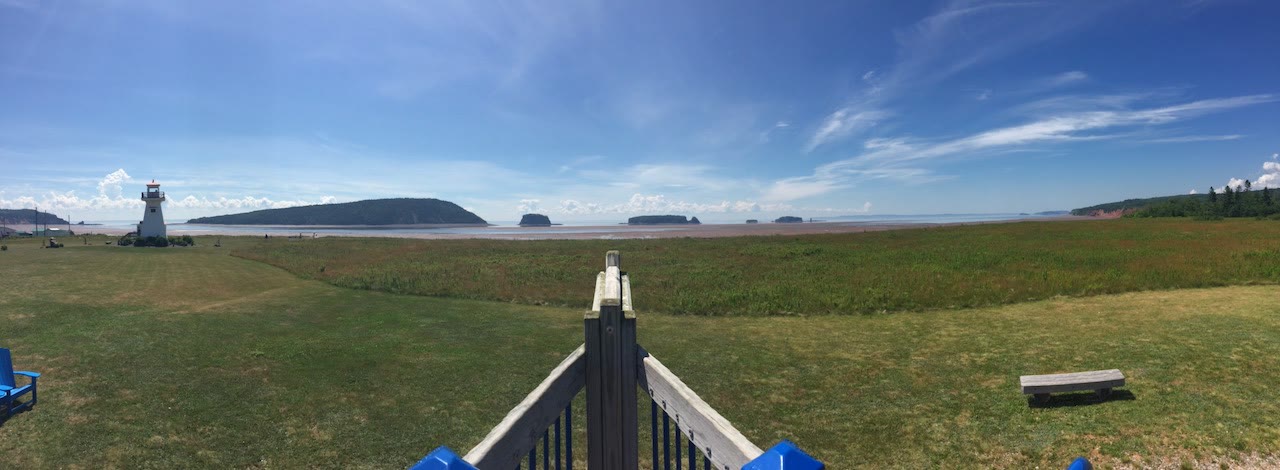
Charging At Five Islands
At Five Islands Park, we used the FLO charger and treated the stop like part of the trip rather than a delay.
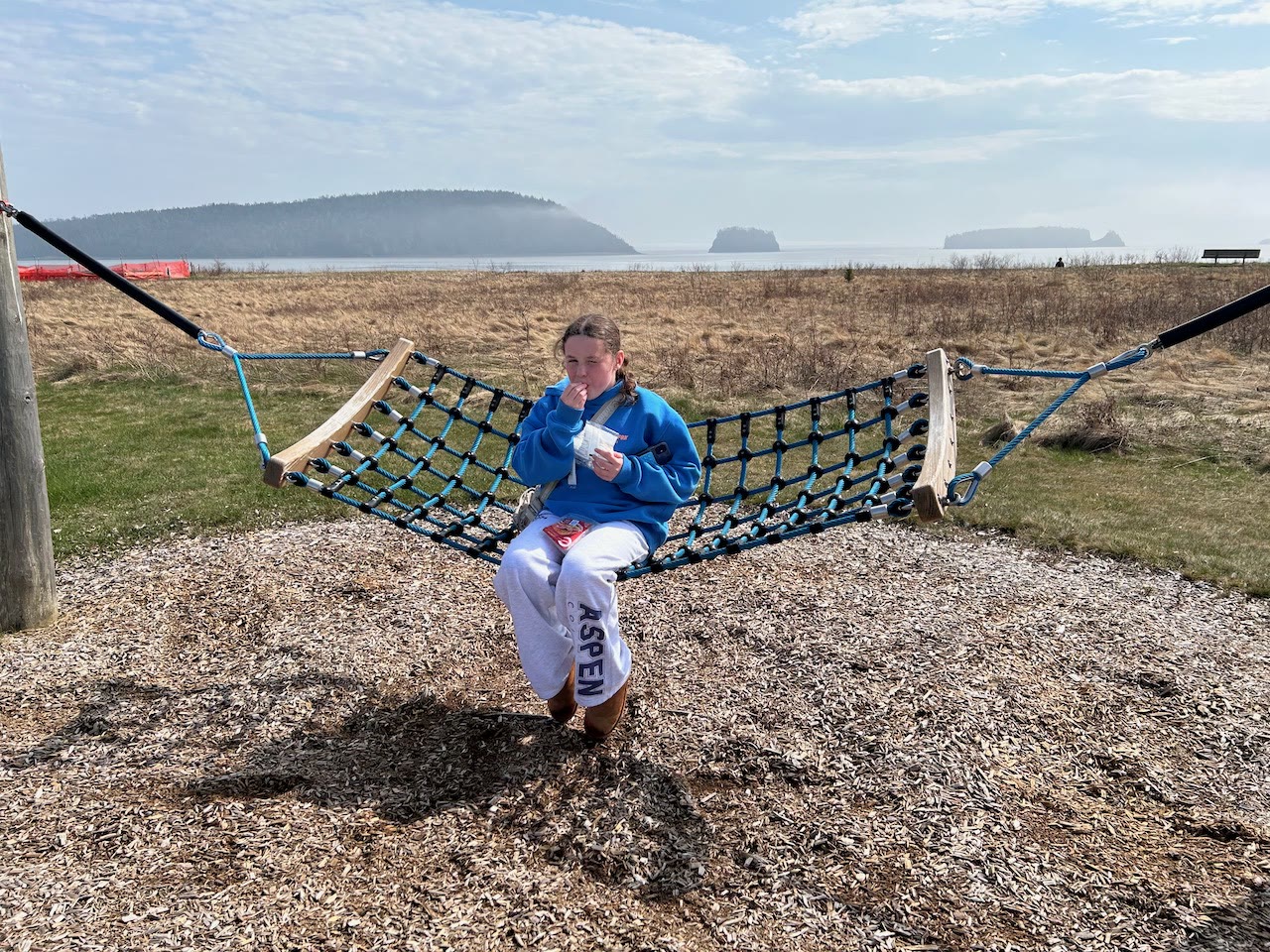
We had a picnic lunch, took in the view of Five Islands and let the truck add enough charge to comfortably reach Masstown.
That is another practical EV road-trip lesson: a slower charging stop feels less annoying when it is attached to a useful stop. Five Islands was not just a plug in a parking lot. It was a place to take a break.
Final Top-Up At Masstown
From Five Islands, we had enough charge to reach Masstown comfortably. At Masstown, we topped up properly on the fast charger and then drove back to Halifax without a problem.
For the full road trip, we charged four times:
- Masstown fast charger on the way from Halifax to Amherst.
- Overnight Level 2 charging in Amherst.
- Five Islands FLO charger on the return route.
- Masstown fast charger again before returning to Halifax.
We did not have issues waiting for chargers, and the apps worked smoothly on this trip.
What This Trip Changed For Me
This was the trip that reduced my Nova Scotia range anxiety.
Before the trip, I was still wondering how practical the Lightning would feel outside normal local driving. After the trip, it was clear that major points in Nova Scotia were reachable with planning.
That does not mean you can ignore charging. It means you need to know the next segment, understand your state of charge and have a backup option before heading into a rural stretch.
Nova Scotia Charging Is Improving
Charging in Nova Scotia is also changing quickly.
Nova Scotia Power says its EV fast charging network now includes 26 sites and 72 charging ports across rural Nova Scotia and near major highways. Its newer 180 kW fast charging network uses ChargeLab, with power sharing and CCS/NACS support, while the older 50 kW fast charging sites remain on the FLO network.
Tourism Nova Scotia also notes that Nova Scotia Power, with Natural Resources Canada and the Nova Scotia Department of Energy, is expanding fast charging in the province, including 15 newer fast-charging locations along major highways and in rural communities.
Before relying on any charger, check Nova Scotia Power’s live EV charging page, PlugShare and the relevant charging apps. Opening dates, connector availability, pricing and payment options can change.
Maritime Charging Is Improving Too
This matters beyond Nova Scotia because a lot of Atlantic Canada road trips cross provincial lines. A Halifax-based EV trip can easily become a New Brunswick, PEI or Maine planning exercise once you start looking at longer weekends or family travel.
Irving Oil is now building its own Irving EV Network at retail sites along key routes in Atlantic Canada, Quebec and New England. The useful part for road trips is not just the charger speed. It is the stop itself. Irving says its EV sites are tied to locations where drivers can use convenience stores, Big Stop restaurants and washrooms while charging.
Irving lists its newer Irving EV fast chargers as offering speeds up to 180 kW. Its own EV Network FAQ says each Irving EV charging location has at least four charging positions, including CHAdeMO and CCS connectors, with payment by app or credit card at the charger.
That kind of stop matters for an F-150 Lightning road trip because a 15- to 30-minute charge feels different when there is food, washrooms and a place to get out of the truck.
New Brunswick is also improving. NB Power’s public charging page says several high-capacity multiport fast charger sites are now available, including:
- Holiday Inn Express in Dieppe, useful for the greater Moncton area.
- Gateway Plaza in Oromocto.
- Vallee-des-Rivieres near Pit Stop Burger, in the Saint-Leonard area.
- Auberge Bouctouche Inn & Suites.
NB Power says these chargers are operating at 100 kW per port during the initial launch, with full 320 kW capacity planned once a new energy-based pricing model receives regulatory approval.
Confirm current status, connector availability and pricing in the NB Power eCharge app, Irving EV app, PlugShare or ChargeHub before relying on any of these stops for a real trip.
What I Carried For Charging Backup
On this trip, I had the Ford mobile charger with me. That gave me the option to plug into 120V or 240V power if I really needed to.
I also had a Tesla adapter. At the time of the audio note, the useful compatible Tesla options in Nova Scotia were limited, with Digby and Yarmouth mentioned as compatible locations. I also noted that a compatible location was apparently expected in Bayers Lake in Halifax sometime in late 2026.
Before counting on Tesla Supercharger access with a Ford F-150 Lightning, confirm current compatibility in Ford navigation, the Tesla app and current adapter guidance.
Lessons For Atlantic Canada EV Road Trips
The biggest lesson is that route planning matters most before the trip starts.
For Atlantic Canada, I would think about EV road trips in segments:
- Where is the next fast charger?
- Is there a useful Level 2 charger at the overnight stop?
- What is the backup route if a charger is busy or unavailable?
- What state of charge do I want before leaving a major town?
- Does the scenic route have enough charging options, or should I return by the main highway?
The Lightning handled the trip well, but the planning made it feel normal.
What I Would Do Again
I would still use PlugShare before leaving. I would still use Apple Maps or truck-integrated battery estimates during the drive. I would still break the trip into smaller navigation segments when travelling through rural areas.
I would also look for overnight charging whenever possible. A Level 2 charger at a hotel can be more useful than chasing a fast charger early the next morning.
What I Would Watch More Closely
I would continue to watch:
- State of charge before leaving rural communities.
- Fast charger status in the app before arriving.
- Whether a charger uses FLO, ChargeLab or another payment system.
- Whether a stop has washrooms, food or somewhere useful to spend charging time.
- Weather, especially cold, wind or heavy rain.
- Elevation changes, especially on coastal routes.
The charging stop itself is only part of the story. The quality of the stop matters too.
Bottom Line
The Halifax/Bedford area to Advocate Harbour road trip showed me that the F-150 Lightning can work well for Nova Scotia travel, even when the destination is outside the easiest highway corridor.
The important part was not pretending range does not matter. It was planning the trip in a practical way: fast charge at Masstown, charge overnight in Amherst, use Five Islands as a scenic top-up and return through Masstown with enough buffer to get home.
For Atlantic Canada EV travel, that is the lesson I would carry forward. Know your chargers, keep a reasonable battery buffer and try to make charging stops part of the trip instead of dead time.
Related AvoidingChores Guides
- Atlantic Canada ATV Trip Planning Guide
- What To Pack For A Remote ATV Ride In Atlantic Canada
- Prepare Satellite Communicator Contacts Before A Trip
- Garmin inReach vs ZOLEO for Canadian Outdoor Users
References
- Nova Scotia Power EV Fast Charging
- Nova Scotia Power electric vehicle charging overview
- Tourism Nova Scotia EV charging stations
- Government of Nova Scotia clean transportation
- Irving Oil EV charging
- Irving EV Network
- NB Power public charging
- Natural Resources Canada New Brunswick ZEV infrastructure backgrounder