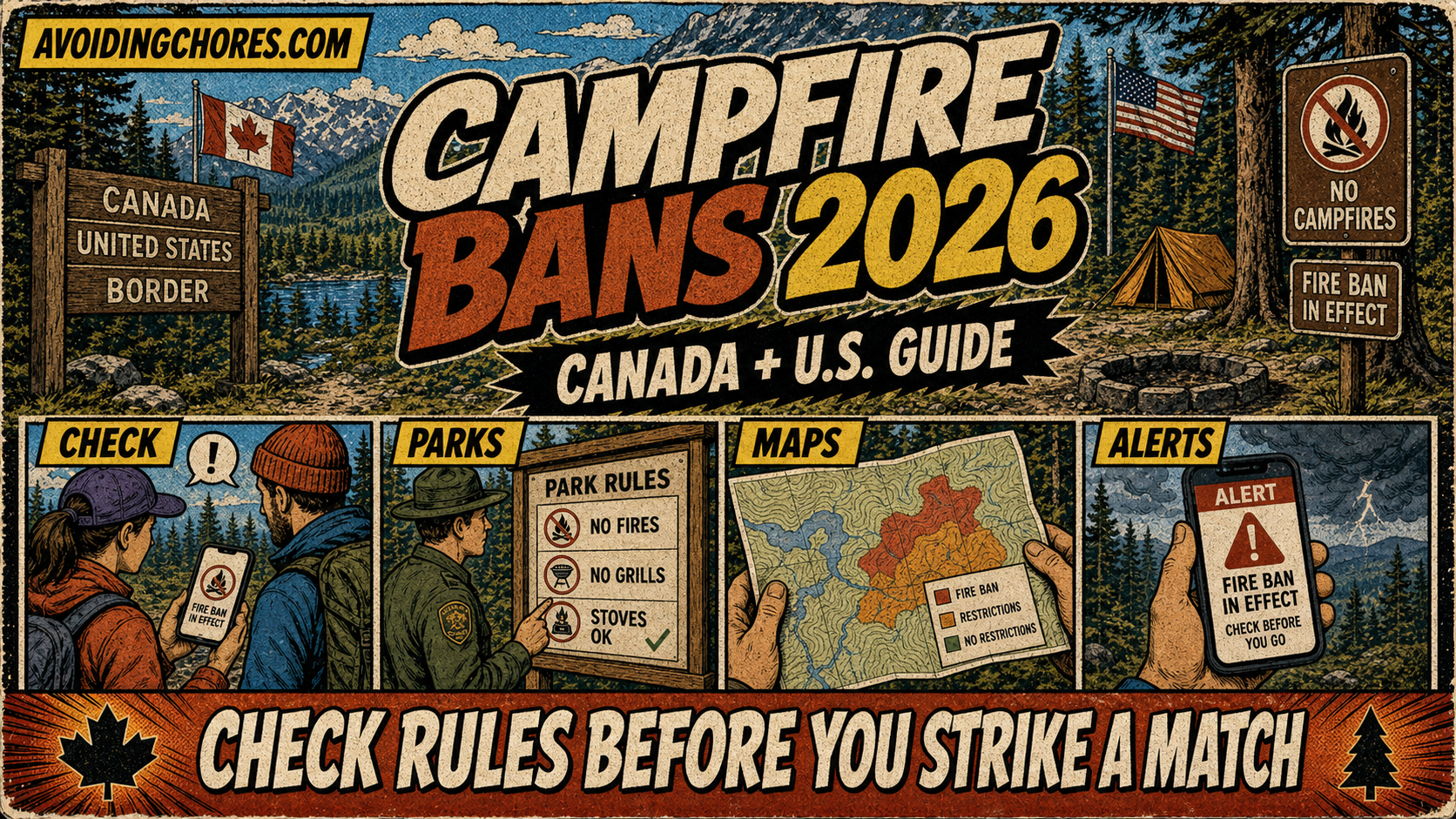
Campfire rules are no longer a set-it-and-forget-it part of summer travel. If you camp in Nova Scotia one weekend, cross into New Brunswick the next, and then head south to a U.S. national park later in the month, you can run into three completely different fire-rule systems before you unpack the cooler.
That is the real 2026 shift. More places now treat open fires as a live-risk decision tied to weather, fuel conditions, and local fire activity, not a blanket summer perk that is always waiting at the campsite.
Verified on July 12, 2026, the current official guidance from Nova Scotia, New Brunswick, Parks Canada, and the U.S. National Park Service all points in the same direction: check the rules before you go, check them again before you light anything, and assume restrictions can tighten quickly.
Why campfire planning feels different now
The old habit was simple: arrive, find the fire ring, buy some wood, and start the evening. The new reality is more conditional. Some jurisdictions use daily burn maps. Some only allow fires in designated fire boxes. Some tighten rules park by park or forest by forest depending on current fire danger.
If you travel across the Canada-U.S. border for camping, hiking, or a national-park road trip, the safest assumption is that the rules will not be consistent from one stop to the next.
Nova Scotia: daily burn windows still matter
Nova Scotia’s official BurnSafe page remains one of the clearest examples of how fast fire permissions can change. During wildfire risk season, which runs from March 15 to October 15, no domestic brush burning or campfires are allowed between 8:00 a.m. and 2:00 p.m. The province updates the map at 2:00 p.m. each day, and municipal bylaws can still add stricter local limits.
That means a campsite plan that looked fine the night before can still change by the time you are setting up in the afternoon. For Nova Scotia campers, the map check is no longer optional housekeeping. It is part of trip prep.
New Brunswick: campfires follow the daily category map
New Brunswick uses a similar daily check model, but the wording is different enough that it is easy to get tripped up if you assume the Nova Scotia rules carry over. The province’s Fire Watch page says Category 1 fires, including campfires and burning wood material, must follow daily burn conditions. Those conditions are updated every day at 2:00 p.m. during fire season.
The New Brunswick map also uses practical time-based restriction language, including no burn, restricted burn, and burn permitted. In restricted-burn periods, the page currently describes burning as permitted only from 8:00 p.m. to 8:00 a.m.
Parks Canada: fires are allowed only where the park says they are
Parks Canada adds another layer that matters for cross-border and interprovincial summer trips. Its visitor guidelines say fires are only allowed in designated fire boxes, and random fires are not allowed in national parks. The same page also says backcountry camping fires are allowed only in areas with designated metal fire boxes.
That is a useful reminder because a campground or backcountry permit does not automatically mean you have campfire permission everywhere within the park. You have to check the site-specific rules and the current advisories for the place you actually booked.
Parks Canada also tells visitors to use firewood provided on site, which is smart both for invasive-species reasons and for keeping your setup aligned with local fire controls.
U.S. national parks: always check alerts before arrival
On the U.S. side, the National Park Service’s fire-safety guidance does not pretend one national rule covers every park. Instead, it tells visitors to check with public-land management agencies for fire restrictions or area closures before leaving home and to pay attention to signs and emergency directions once they arrive.
That is exactly the mindset Canadian campers need when heading south. A fire ring at the campsite does not guarantee fires are currently allowed, and a park that usually permits evening campfires may still tighten restrictions during a hot, dry stretch.
What to check before you rely on a campfire
- Check the official burn or park page on the day you leave, not just when you book.
- Check again after crossing into another province, state, or park system.
- Do not assume campground rules, Crown land habits, provincial rules, and national-park rules match.
- Look for time-of-day restrictions, not just yes-or-no bans.
- Use only designated fire boxes or rings where the site requires them.
- Have a no-fire supper plan so a red-map day does not wreck the trip.
The practical takeaway
Campfire bans are not really the exception anymore. They are part of the normal summer camping workflow, especially if you move between provinces, parks, and U.S. destinations in the same season.
The practical upgrade is simple: treat fire status the same way you treat weather, route conditions, or ferry timing. Check it early, check it again, and build your trip around the possibility that the answer might be no.
Related reading
- Crossing the Border for a U.S. National Park This Summer? Here’s What Changed in 2026
- Emergency Communication Kit For Home Or Outdoors
- 72 hour emergency kit for home or car