Nova Scotia’s provincial parks opened for the season back in May, and if you’ve already booked a site for July or August, here’s the short version: pack like always, but check the burn map before you light anything.
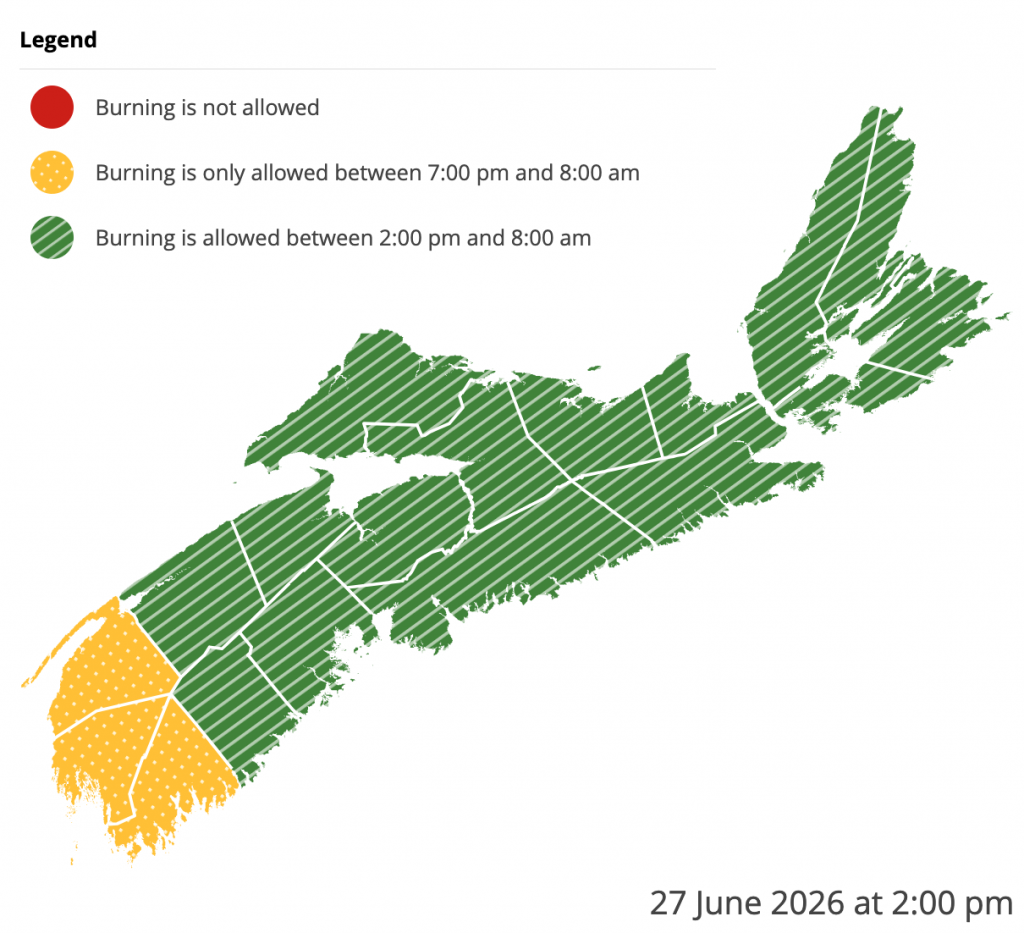
Provincial officials have been straightforward about it this year — another dry wildfire season is expected, and the days of treating that as a one-off are over. As Minister of Natural Resources Kim Masland put it when announcing this year’s openings, the conditions that used to be occasional are now something you can pretty much plan on happening every summer.
What’s New at the Parks This Year
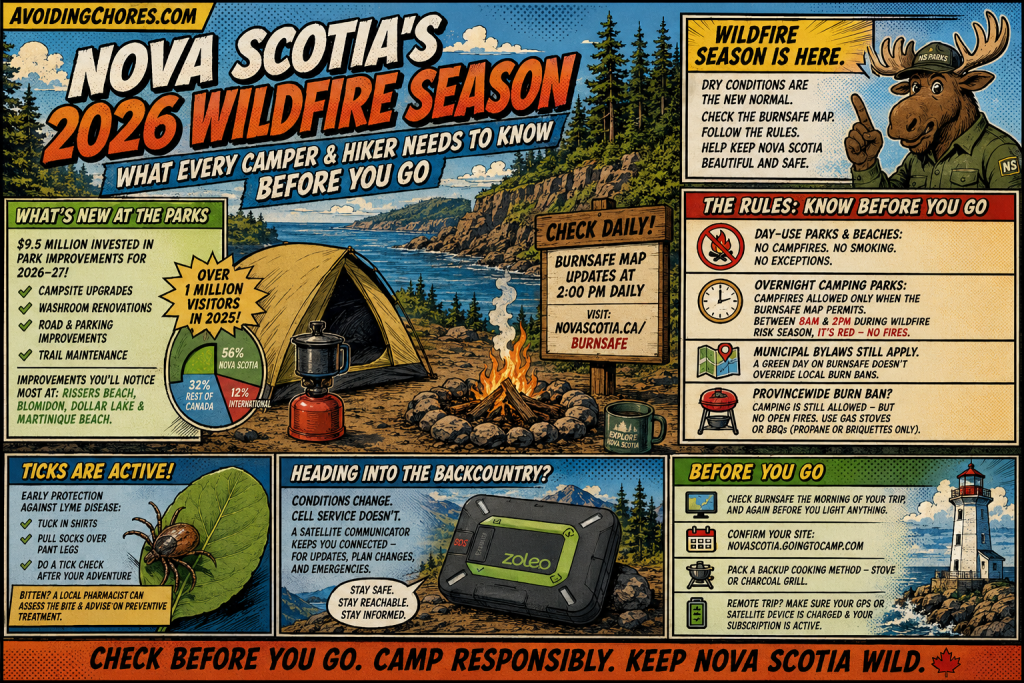
The 2026-27 provincial budget put $9.5 million toward park improvements — campsite upgrades, washroom renovations, road and parking lot work, and trail maintenance. Visitors should notice the difference most at Rissers Beach, Blomidon, Dollar Lake, and Martinque Beach in particular.
Worth noting for planning purposes: provincial parks pulled in more than a million visitors last year, and the camper breakdown skews heavily local — 56% from Nova Scotia, 32% from elsewhere in Canada, and 12% international. If you’re hoping to snag a site at one of the popular spots, that local demand is exactly why reservations vanish as fast as they do.
The Rules You Actually Need to Follow
This is the part that trips people up every year, so let’s be specific:
- Day-use parks and beaches: campfires and smoking are prohibited, full stop, no exceptions for season or weather.
- Overnight camping parks: campfires are allowed only when the daily BurnSafe map says conditions permit it. The map updates at 2 p.m. daily, and between 8 a.m. and 2 p.m. during wildfire risk season, it’s red — no domestic brush burning or campfires, period — regardless of what it shows later in the day.
- Municipal bylaws still apply on top of the provincial map, so a green BurnSafe day doesn’t automatically override a local burn ban where you’re camping.
- When a burn ban does go into full effect provincewide, as has happened in past dry stretches, camping is still allowed but every open fire is off — gas stoves and barbeques (propane or charcoal briquettes only) become your cooking options.
The other thing the province is flagging this year: ticks. With early protection against Lyme disease in mind, the advice is the usual stuff — tuck in shirts, pull socks over pant legs, spray on some Atlantick (now PureGard) repellent — but if you do get bitten, a local pharmacist can assess the bite and determine whether preventive treatment makes sense before symptoms ever show up.
Why This Matters More If You’re Headed into the Backcountry
Day-use bans and BurnSafe checks are easy enough to follow if you’re car camping ten minutes from a ranger station. It gets trickier once you’re a few hours into Cape Chignecto or up in the Cape Breton Highlands backcountry, where cell service is unreliable and conditions can shift between when you checked the map and when you actually need a fire.
This is exactly the kind of situation where a satellite communicator earns its weight in your pack — not just for emergencies, but for staying reachable enough to get a fire-ban update relayed to you mid-trip, or to let someone know you’ve changed your plans because conditions on the ground don’t match what the map said that morning.
Before You Go
- Check BurnSafe the morning of your trip, and again before you light anything that evening — the 2 p.m. update can change your plans
- Confirm your site through the provincial reservation portal if you haven’t already; popular parks book out well in advance
- Pack a backup cooking method (stove or charcoal grill) regardless of what the forecast says
- If you’re heading somewhere remote enough that cell coverage is a question mark, make sure whatever GPS or satellite device you’re bringing is charged and the subscription is active before you leave the driveway
None of this should keep you off the trail. It just means the “check before you go” habit matters more this year than it used to — and probably every year from here on out.